Did you
know there are health benefits to having fresh cut flowers in your home or
office? Let’s explore the wonderful benefits of having fresh cut flowers in
your garden, home, or office. The benefits are easily obtainable and can be
created in your garden. There are a wide range of annuals, perennials, bulbs,
tropicals, groundcovers, shrubs, and trees that can be used as fresh cut
flowers and floral greens. A fresh cut flower garden does not necessarily mean
only flowering plants; there are non-flowering trees, shrubs, and groundcovers
make an excellent addition for fresh greens in your flower arrangement. There
are several flowering shrubs and trees that can be used as fresh cut flowers indoors.
Depending on your USDA planting zone you may be lucky enough to enjoy a
year-round cutting garden.
 |
| Strelitzia nicolai - White Bird of Paradise |
Some of the plants that are suggested in the newsletter you may
already have planted in your garden, and a cutting garden does not necessarily
have to be in a specific area of your garden. Your cutting garden can be placed
throughout your planting beds. A cutting garden can be desirable plants that meet
the criteria of being a fresh cut flower, this is based on vaselife of the
flower or floral green used. Vaselife is defined as to how long a flower or
greenery retains its appearance in a vase. Besides having a beautiful garden to look and
enjoy, there are health benefits to having fresh cut flowers in the home or
office. Numerous studies have shown an increase in positive emotional mood
changes when fresh cut flowers and plants were present, and a range of age
groups were involved in the studies from groups of people just entering the
workforce to the elderly. All studies showed a positive emotional mood change
to having fresh cut flowers and plants in their home or office. In one
study conducted by Harvard Medical School, revealed “that people feel less
depressed, have less anxiety and worry, and people feel more compassionate
toward others when fresh cut flowers are present in the home.” In an
eight-month study conducted by Texas A & M University research, Harvard
Medical School, and Massachusetts General Hospital “worker’s idea generation,
creative performance and problem-solving skills improved substantially in
workplace environments that included flowers and plants”. Another study
conducted by Harvard Medical School to the benefits of having flowers in the
home showed “Flowers feed compassion, Flowers chase away anxieties, worries and
the blues away at home, and having flowers at home can carry-over to our mood
at work”. In one study by Rutgers University the study demonstrated “when
flowers are present, ease and decrease depression, inspire social networking
and encourage companionship, and refresh recent memory as we age”. For
more information about these studies, visit: www.aboutflowers.com.
 |
| Rudbeckia sp. |
You can have a fresh cut flower garden in a specific area, have a
fresh cut container garden, or you may have a few of the flowers
already growing in your garden. For people living in apartments, condos,
or town homes you can have your fresh cut flower garden in containers that will
entice everyone to your patio this summer and fall. Here is a list of flowers
and greens that can be used for floral arrangements. A few are my favorites
that are easy to grow in your garden and would make excellent fresh cut flower
bouquets. Some of the plants listed can also be used as floral greenery.Agapanthus africanus 'Queen Anne': Queen
Anne Lily of the Nile; African Lily. Type: Ground
cover, border, edger. Height: 2 – 2.5 feet. Spacing: 20”
– 24” apart. Light Requirements: Full sun to
semi-shade. Flowering Season: Spring, summer, and fall. Vaselife: 6
– 12 days. Foliage and flowers can be used in arrangements.
 |
| Agapanthus africanus 'Queen Anne' |
Alpinia mutica: Small Shell Ginger. Type:
Tropical Herbaceous perennial. Height: 5 – 6 feet. Spacing: 4 – 6 feet
apart. Light Requirements: Full sun to semi-shade. Flowering Season: Summer,
fall, winter. Vaselife: 6 – 14 days. Foliage and flowers can be used in
arrangements.
 |
| Small Shell Ginger |
Alpinia purpurata: Red Ginger. Type:
Tropical Herbaceous perennial. Height: 5 – 6 feet. Spacing: 4 – 6 feet
apart. Light Requirements: Full sun to semi-shade. Flowering Season: Summer,
fall, winter. Vaselife: 6 – 14 days. Foliage and flowers can be used in
arrangements.
 |
| Red Ginger |
Alpinia zerumbet 'Variegata':
Variegated Shell Ginger. Type: Tropical Herbaceous perennial.
Height: 5 – 6 feet. Spacing: 4 – 6 feet apart. Light Requirements: Full
sun to semi-shade. Flowering Season: Summer, fall, winter. Vaselife: 6 – 14
days. Foliage and flowers can be used in arrangements.
 |
| Variegated Shell Ginger |
Anthurium 'Lady Jane': Lady
Jane Anthurium. Type: Tropical Herbaceous perennial. Height: 1.5 feet.
Spacing: 18 – 24 inches apart. Light Requirements: Semi-shade to shade.
Flowering Season: All year. Vaselife: 14 – 28 days. Immerse flower head in
water for 10 minutes.
 |
| Lady Jane Anthurium |
Antirrhinum majus: Snapdragon. Type:
Annual. Height: 6 – 36 inches, depending on variety. Spacing: 8 – 12 inches
apart. Light Requirements: Full sun to semi-shade. Flowering Season: Fall to
summer. Vaselife: 10 – 16 days.
 |
| Snapdragon |
Asparagus densiflorus 'Myers': Foxtail
Fern; Myers Asparagus Fern. Type: Ground cover. Height: 2 feet. Spacing: 3
– 5 feet apart. Light Requirements: Full sun to shade. Flowering Season: Spring
and summer. Vaselife: 6 – 14 days.
 |
| Foxtail Fern |
Leucanthemum X superbum: Shasta
Daisy. Type: Perennial. Height: 8 – 30 inches, depending on variety.
Spacing: 8 – 12 inches apart. Light Requirements: Full sun to semi-shade.
Flowering Season: Spring. Vaselife: 1 – 2 weeks.
 |
| Shasta Daisy |
Cyrtomium falcatum: Holly Fern. Type: Ground
cover. Height: 2' - 3'. Spacing: 1' apart. Light Requirements: Shade to
semi-shade; no afternoon sun. Flowering Season: N/A. Foliage can be used in
arrangements. Vaselife: 7 – 10 days.
 |
| Holly Fern |
Dahlia hortensis 'Figaro Mix': Dahlia. Type:
Annual. Height: 18 – 30 inches. Spacing: 8 – 12 inches apart. Light
Requirements: Full sun to semi-shade. Flowering Season: Spring, summer, and
fall. Vaselife: 7 – 10 days.
 |
| Dahlia |
Davallia solida: False Leatherleaf Fern. Type:
Ground cover. Height: 2.5 – 3 feet. Spacing: 3 – 5 feet apart. Light
Requirements: Semi-shade to shade, no afternoon sun. Flowering Season N/A.
Foliage can be used in arrangements. Vaselife: 7 – 15 days.  |
| False Leatherleaf Fern |
Delphinium grandiflorum 'Blue Butterfly':
Chinese Delphinium. Type: Annual and perennial varieties. Height: 2 – 5 feet.
Spacing: 12 – 24 inches apart. Light Requirements: Full sun to semi-shade.
Flowering Season: Spring and summer. Vaselife: 12 – 14 days.
 |
| Chinese Delphinium |
Dendrobium spp. Type:
Tropical Herbaceous perennial. Height: 6 inches – 6 feet depending on
variety. Spacing: 12 – 18 inches apart. Light Requirements: Semi-shade to
shade, in tropical climates the orchids can be grown on tree trunks.
Flowering Season: All year. Vaselife: 7 days.
 |
| Dendrobium spp. |
Gerbera jamesonii: Gerbera Daisy. Type:
Perennial. Height: 1.5 – 2 feet. Spacing: 12 inches apart. Light Requirements:
Full sun to semi-shade. Flowering Season: Spring, summer, and fall. The crown
needs to be above the soil. Vaselife: 4 – 14 days.
 |
| Gerbera Daisy |
Helianthus annuus: Sunflower. Type:
Annual. Height: 2 – 12 feet depending on variety. Spacing: 12 inches apart.
Light Requirements: Full sun. Flowering Season: Summer – fall. Vaselife: 6 – 12
days.
 |
| Sunflower |
Heliconia 'Butterfield':
Heliconia. Type: Tropical Herbaceous perennial. Height: 4 – 5
feet. Spacing: 3 – 5 feet apart. Light Requirements: Full sun to semi-shade.
Flowering Season: All year for tropical climates, spring, summer, and fall for
all other areas. Vaselife: 7 – 14 days.
 |
| Heliconia 'Butterfield' |
Heliconia rostrata: Lobster Claw. Type:
Tropical Herbaceous perennial. Height: 6 – 7 feet. Spacing: 3 – 5 feet
apart. Light Requirements: Full sun to semi-shade. Flowering Season: All year
for tropical climates, spring, summer, and fall for all other areas. Vaselife:
7 – 14 days.
 |
| Lobster Claw Heliconia |
Hydrangea macrophylla: Common Hydrangea. Type:
Deciduous flowering shrub. Height: 4 – 6 feet. Spacing: 3 – 5 feet apart. Light
Requirements: Semi-shade. Flowering Season: Spring. Vaselife: 7 days.
 |
| Hydrangea |
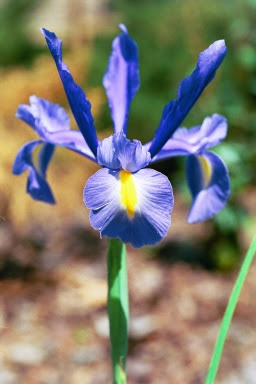
Iris spp.: Iris Hybrids. Type:
Rhizome or bulb, which is planted in the fall. Height: 8 inches to 3 feet
depending on variety. Spacing: 15 – 20 inches apart. Light Requirements: Full
sun to semi – shade. Flowering Season: Spring. Vaselife: 2 – 5 days.
 |
| Siberian Iris |
Liatris spicata: Blazing Star. Type:
Perennial. Height: 24 inches. Spacing: 12 – 18 inches apart. Light
Requirements: Full sun. Flowering Season: Summer and fall. Vaselife: 5 – 7
days.
Lilium spp.: Lilies. Type:
Perennial bulb, which is planted in the fall, the plant can be purchased in the
spring. Height: 2 – 4 feet. Spacing: 8 – 12 inches apart. Light Requirements:
Full sun to semi – shade. Flowering Season: Spring. Vaselife: 1 to 2
weeks. Lily pollen may stain anything it touches, so anthers need to be
removed.
Liriope muscari 'Evergreen Giant':
Evergreen Giant Lily Turf. Type: Ground cover. Spacing: 18 – 24
inches apart. Light Requirements: Full sun to shade. Flowering Season: Spring
and summer, the foliage is used as greenery. Vaselife: 7 days.
 |
| Evergreen Giant Lily Turf |
Narcissus spp.: Daffodils. Type:
Bulb, which is planted in the fall. Height: 6 – 18 inches depending on the
variety. Spacing: 6 inches apart. Light Requirements: Full sun to semi – shade.
Flowering Season: Late winter (February) to early spring. Vaselife: 4 – 8
days. Daffodils exude a slimy material that is toxic to other flowers. DO
NOT hydrate, store, or arrange daffodils with other flowers.
 |
| Daffodils |
Phalaenopsis sp.: Moth Orchid.
Type: Tropical Herbaceous perennial. Height: 6 inches – 6 feet depending
on variety. Spacing: 12 – 18 inches apart. Light Requirements: Semi-shade to
shade, in tropical climates the orchids can be grown on tree trunks.
Flowering Season: All year. Vaselife: 7 days.
 |
| Phalaenopsis |
Rosa 'Black Magic': Hybrid Red Rose. Type:
Deciduous flowering shrub. Height: 3 – 20 feet depending on variety. Spacing: 4
– 6 feet apart. Light Requirements: Full sun to semi – shade, or at least
5 to 6 hours of full sun. Flowering Season: Most varieties will bloom spring, summer,
and fall. Vaselife: 6 – 16 days. The hybrid tea rose called Memorial Day
is a very good rose that is easy to care for.
Schefflera arboricola: Dwarf Schefflera. Type:
Shrub. Height: 8 – 10 feet. Spacing: 3 – 5 feet apart. Light Requirements: Full
sun to shade. Flowering Season: N/A the plant is used as greenery. Vaselife: 7
days.
 |
| Variegated Dwarf Schefflera |
 |
| Dwarf Schefflera |
Limonium sp.: Statice. Type:
Annual. Height: 2 feet. Spacing: 8 – 12 inches apart. Light Requirements: Full
sun to semi – shade. Flowering Season: Late winter to summer, seeds are usually
planted from September to December for late winter to summer blooms. Vaselife:
1 to 2 weeks. The flowers can be harvested and dried upside down.
Matthiola incana: Stock. Type:
Annual. Height: 18 – 24 inches. Spacing: 8 – 12 inches apart. Light
Requirements: Full sun to semi – shade. Flowering Season: Fall, winter, and
spring. Vaselife: 5 – 8 days. This plant is very fragrant and I have always
loved the fragrance.
Strelitzia reginae: Bird of Paradise. Type:
Tropical Herbaceous perennial. Height: 3 – 4 feet. Spacing: 3 – 5 feet
apart. Light Requirements: Full sun to semi-shade. Flowering Season: Summer,
fall, winter. Vaselife: 6 – 14 days. Foliage and flowers can be used in
arrangements.
 |
| Bird of Paradise |
Tulipa spp.: Tulips. Type:
Annual bulb in southern climates, perennial bulb in northern climates. Height:
8 – 24 inches. Spacing: Is determined by the Tulip variety chosen, and which
climate zone you reside. Light Requirements: Full sun to semi – shade.
Flowering Season: Spring, it is suggested to stagger your planting of Tulip
bulbs every 7 to 14 days to give you continuous color during the spring.
Vaselife: 3 – 6 days. For the southern climate areas, you need to chill your
Tulip bulbs in the refrigerator for 12 weeks in the crisper section before
planting, even if the grower has already chilled the bulbs in
advance. Illustration: Right: Variegated Schefflera.
Woody Branches that are blooming: Pussy Willow,
Bittersweet, Flowering Cherry, Flowering Crab, Forsythia, Redbud, and Spirea.
Harvest the branches when the plant starts to show color or the bloom is
starting open. Pussy Willow can be harvested after the blooms are fully open.
Woody Branches that are non-blooming: Curly
Willow, Red Osier Dogwood, and Yellow Twig Dogwood. The branches can be
harvested at any time.
Like my photos? Need stock photography? Click here to my botanical portfolio.
Visit HibiscusandMore.com for botanical fine art prints.
All photographs and digital images are ©Cheryl Ann Meola 2009. All
Rights Reserved. All photographs and digital images displayed in this article
are for viewing purposes only and cannot be duplicated. Place your cursor over
the picture for the plant name.