What’s the use of drought
tolerant perennials? There are several reasons as to why to incorporate them
into the garden. To mention a few: the plants that are considered drought
tolerant have key characteristics that help them survive moderate to severe
drought; planting or planning a drought tolerant garden will conserve one of
our most valuable resources – water; and believe it or not you will have a
garden jammed pack with lots of color and action. Several of the plants listed
serve more than one purpose in the garden than just being drought tolerant. For
example: some plants will deter deer and rabbits; attract hummingbirds and
butterflies to the garden; can be used as herbs for cooking; and lastly used in
fresh-cut or dried floral arrangements. And, when you started planning this
project of drought tolerant perennials you were thinking dull, drab garden.
Right?
Let me introduce to you
drought tolerant gardening that will have lots of color and action. When
planning your garden for drought we need to consider a few things such as
light, drainage, soil conditions, and watering. Full sun is the best for all
the perennials listed below. The general rule of thumb is that an area is
considered full sun if that area receives 6 or more hours a day of sunlight.
Drainage is essential to the plants. When planning the garden do not plant in
an area where water collects after rainy weather because the plants will not
tolerate wet feet or soggy conditions. Drought tolerant plants will do better
in soils that are not rich in compost. Save these areas for the plants that
liked to be pampered. Even though the plant is considered to have drought
tolerance the plant needs to be established in the ground and this usually
takes a few months to several months for a plant to be established. Below are a
few of the plants listed as drought tolerant perennials. I chose these
varieties because the plants are more than drought tolerant; the plants will
provide color, attract wildlife and will serve as more than one purpose in the
garden.
Achillea
millefolium – Yarrow: has lacy, fern-like foliage with flat, round blossoms in a range
of colors, white, yellow, red, peach, and pink that bloom from summer to fall. Zones:
3-9. Height from 18-36 inches. Spacing: 10-12 inches apart. Light: Full sun.
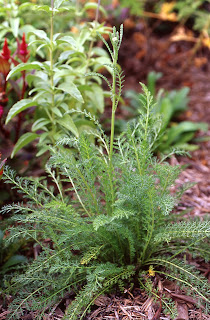 Uses:
Yarrows tolerate poor soil and can be used in borders, mass plantings, and rock
gardens. The flowers attract butterflies and hummingbirds to the garden and can
be used in fresh or dried arrangements. Periodically deadhead faded flowers. (Pictured Right).
Uses:
Yarrows tolerate poor soil and can be used in borders, mass plantings, and rock
gardens. The flowers attract butterflies and hummingbirds to the garden and can
be used in fresh or dried arrangements. Periodically deadhead faded flowers. (Pictured Right).

Allium
spp. – Flowering Onion: blooms from early spring through the fall. Foliage has a mild
onion scent that keeps deer and rabbits away from the garden. Zones: 3-9.
Height: 12-36 inches. Spacing: 4-6 inches apart. Light: Full sun. Uses:
Borders, mass plantings, rock gardens.
Anthemis
tinctoria – Marguerite Daisy: provides several weeks of daisy-like flowers in the summer. Deer
and rabbit resistant plant. Zones: 3-8. Height: 24-30 inches. Spacing: 24
inches apart. Light: Full sun. Uses: Beds, borders, and cut flowers.
Artemisia
‘Powis Castle’ – Silver Sage: Fragrant, lacy, silver foliage provides contrast to ornamental
grasses, flowers, and foliage. The foliage is used in fresh or dried
arrangements, fresh herbal wreaths, and drying for potpourris. Deer and rabbit
resistant plant. Zones: 5-9. Height: 2-3 feet. Spacing: 3-4 feet apart. Light:
Full sun. Uses: Beds and borders.
Asclepias
tuberosa – Butterfly Milkweed: Deer resistant plant. Attract butterflies to your garden. This
plant is a nectar and larval food plant to the Monarch butterfly. Zones: 3-9.
Height: 18-24 inches. Spacing: 1-2 feet apart. Light: Full sun.
Uses: Butterfly gardens and borders. (Pictured Right).
 |
Uses: Butterfly gardens and borders. (Pictured Right).
Callirhoe
involucrata – Poppy Mallow, Wine Cups: Attractive lacy foliage with purple flowers with
a white eye that makes an excellent ground cover for large areas. Zones: 4-9.
Height: 12 inches. Spacing 24-36 inches apart. Light: Full sun. Uses: Ground
cover, border fronts, cascading over retaining walls, spiller for containers.
Centranthus
ruber – Jupiter’s Beard: Excellent fresh cut flower with fragrant foliage. Butterfly
attractant, deer and rabbit resistant plant. Companion plant to other
perennials in the garden: Lamb’s ear, Artemisia, and Baptisia. Trim spent
flower heads to extend blooming. Zones: 4-9. Height: 24-30 inches. Spacing:
24-30 inches apart. Light: Full sun. Uses: Specimen, borders, small group
plantings.
Coreopsis
spp. – Tickseed: Single or double flowers are excellent for fresh cut arrangements.
Attract numerous butterflies to the garden. Trim spent flower heads to
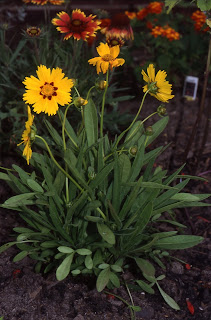 extend
blooming. Zones: 3-9. Height: 3 feet or shorter. Spacing: From 1-3 feet apart.
Light: Full sun. Uses: Borders, edger, or as a ground cover. (Pictured Left).
extend
blooming. Zones: 3-9. Height: 3 feet or shorter. Spacing: From 1-3 feet apart.
Light: Full sun. Uses: Borders, edger, or as a ground cover. (Pictured Left).

Echinacea
purpurea – Coneflower: There are many varieties of coneflower available. They come in a
variety of heights, colors, single or double flowers. Any variety you choose
will be drought tolerant. Single or double flowers are excellent for fresh cut
arrangements. Attracts numerous butterflies to the garden. Trim spent flower
heads to extend blooming. Zones: 4-9. Height: 28-36 inches. Spacing: 18-24
inches apart. Light: Full sun. Uses: Attracts butterflies and hummingbirds to
the garden, perennial, wildflower, mixed or cottage gardens, mass plantings,
companion plant to Rudbeckia – Black-eyed Susan. (Pictured below Right).


Echinops
spp. – Globe Thistle: One of the underused drought tolerant plants and the flowers are
good to use in fresh or dried floral arrangements. Trim spent flower heads to
extend blooming. The flowers attract hummingbirds and butterflies to the
garden. Rabbit and deer are repelled by this plant in the garden, which is
another plus to using this plant. Zones: 3-10. Height: 42-46 inches. Spacing:
18-24 inches. Light: Full sun. Uses: Borders, mixed flower gardens, companion
plant to grasses.
Gaillardia
grandiflora – Blanket Flower: The flowers are good to use in fresh floral arrangements. Trim
spent flower heads to extend blooming. The flowers attract butterflies to the
garden. Rabbit and deer are repelled by this plant in the garden, which is
another plus to using this plant. Zones: 3-10. Height: 2-3 feet. Spacing: 1-2
feet. Light: Full sun. Uses: Borders, cottage gardens, cutting gardens.
Gaura
lindheimeri – Whirling Butterflies: The airy flowers attract butterflies and hummingbirds to the
garden. Trim spent flower heads to extend blooming. Zones: 5-9. Height: 24-36
inches. Spacing: 24-36 inches. Light: Full sun. Uses: Borders, cutting and
perennial gardens.
Geum triflorum
– Prairie Smoke: Red to light pink flowers, but the real attraction to this plant
is the airy, feathery seed heads. Zones: 3-8. Height: 12-15 inches. Spacing:
6-8 inches. Light: Full sun. Uses: Deer resistant, border, ground cover, or
rock gardens.
Helianthus
maximiliana – Maximilian’s Sunflower: Bright yellow flowers on tall stems will attract butterflies to
the garden. Zones: 3-9. Height: 3-10 feet. Spacing: 36 inches. Light: Full sun.
Uses: Show stopper to any garden. Place in the back of the garden. Accent,
specimen, fresh cut flower gardens, wildlife gardens, and cottage gardens.
Hemerocallis
spp. – Daylily: Daylilies
are available in every color except blue. Zones: 3-10. Height: 12 inches to 4
feet depending on variety. Spacing: 6 to 48 inches
 depending on variety. Light:
Full sun. Uses: Beds, borders, and groundcover. Deadhead to achieve re-bloom. (Pictured Left).
depending on variety. Light:
Full sun. Uses: Beds, borders, and groundcover. Deadhead to achieve re-bloom. (Pictured Left).

Hymenoxys
acaulis – Sundancer Daisy: Bright yellow 1-inch flowers. Zones: 4-9. Height: 12 inches.
Spacing: 12-24 inches. Light: Full sun. Uses: Edger or borders. Flowers attract
butterflies.
Lantana camara – Lantana: Lantana plants come in a variety of heights, which can be used as groundcovers to shrubs. The plants provide non-stop color from spring to first frost. Zones: 7-11, outside zone 7 the plant is

Lavandula
angustifolia – English Lavender: Wonderful fragrant lavender flowers and silver foliage. Zones:
5-9. Height: 18-36 inches. Spacing: 12-18 inches. Light: Full sun. Uses: Deer
and rabbit resistant, attracts butterflies and hummingbirds, fragrant flowers
and foliage, flowers can be used fresh or dried, containers, border fronts,
rock gardens, herb gardens, scented gardens. Deadhead after flowering.
Linum
perenne – Blue Flax: Bright blue flowers cover the plant from late spring to fall.
Zones: 3-9. Height: 18-30 inches. Spacing: 10-12 inches. Light: Full sun. Uses:
Very showy flowers for beds and borders. Deer and rabbit resistant.
Monarda
didyma – Bee Balm: Fragrant foliage and flowers will attract butterflies and
hummingbirds to your garden. The flower colors are in shades of pink, red,
lavender, and white. Zones: 3-9. Height: 18-36 inches. Spacing: 24-36 inches. Light:
Full sun. Uses: Beds, borders, cut or dried flowers.
Monarda
fistulosa – Wild Bergamot: Fragrant foliage and flowers will attract butterflies and
hummingbirds to your garden. The flower colors are in shades of pink/lavender.
Zones: 3-9. Height: 18-36 inches. Spacing: 24-36 inches. Light: Full sun. Uses:
Beds, borders, cut or dried flowers.
Nepeta
racemosa – Catmint: Fragrant flowers and foliage will attract butterflies to your
garden. Zones: 4-9. Height: 18-36 inches depending on variety. Spacing: 18-24
inches depending on variety. Light: Full sun. Uses: Deer and rabbit resistant.
Beds and borders. Groundcover.
Nepeta x
faassenii – Catmint: Fragrant flowers and foliage will attract butterflies to
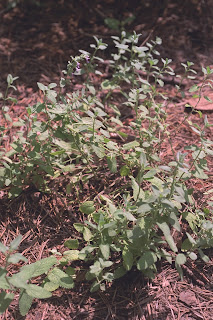 your
garden. Zones: 4-9. Height: 12-24 inches. Spacing: 12-24 inches. Light: Full
sun. Uses: Deer and rabbit resistant. Beds, borders, and groundcover. (Pictured Right).
your
garden. Zones: 4-9. Height: 12-24 inches. Spacing: 12-24 inches. Light: Full
sun. Uses: Deer and rabbit resistant. Beds, borders, and groundcover. (Pictured Right).

Oenothera
spp. – Evening Primrose: Masses of flowers that open in the evening and close in the
morning. A good groundcover to plant around outdoor entertainment areas,
especially nighttime activities. Zones: 4-9. Height: 15 inches. Spacing: 18-24
inches. Light: Full sun. Uses: Groundcover for sunny areas.
Penstemon
spp. – Beardtongue: Zones: 4-10. Height: 12-36 inches. Spacing: 18-24 inches apart.
Light: Full sun. Uses: Mixed perennial garden, attracts butterflies and
hummingbirds.
Perovskia
atriplicifolia – Russian Sage: Zones: 4-9. Height: 3-5 feet. Spacing: 24-36 inches apart. Light:
Full sun. Uses: Containers, bed and borders, cut flowers, butterfly attractant.
Rosmarinus
officinalis – Rosemary: Zones: 6-10. Height: 4 feet. Spacing: 3-5 feet apart. Light: Full
sun to partial shade. Uses: The leaves are used in lamb and fish dishes,
butterfly nectar plant, and containers.
Rudbeckia
fulgida – Black Eyed Susan: Zones: 3-10. Height: 18-30 inches. Spacing:
 12-24 inches. Light:
Full sun to partial shade. Uses: Beds and borders, containers, attract birds
and butterflies. (Pictured Left).
12-24 inches. Light:
Full sun to partial shade. Uses: Beds and borders, containers, attract birds
and butterflies. (Pictured Left).

Salvia
spp. – Sages: Autumn
Sage - Salvia greggii 'Maraschino'. Zones: 7-10. Height: 3’ – 4’.
Spacing: 18” – 24” apart. Light: Full sun to partial shade. Uses: Butterfly and
hummingbird attractant, accent, cut flower, herb and perennial garden. Sage
- Salvia officinalis. Height: 3 feet. Spacing: 12 inches apart. Light
Requirements: Full sun to partial shade. Leaves are used in stuffing and meat
dishes. (Pictured Below Right).


Sedum
spp.: Sedums,
Stonecrops: Zones: 3-11. Height: 2-24 inches. Spacing: 4-18 inches apart.
Light: Full sun. Uses: Containers, slopes, rock gardens, cracks and crevices,
butterfly attractant.
Stachys
byzantine – Lamb’s Ear: Zones: 3-9. Height: 12-18 inches. Spacing: 10-18 inches apart.
Light: Full sun. Uses: Borders, edger, containers, rock garden.
Thymus
spp. – Thymes: Lemon
Thyme – Thymus x citriodorus. Height: 12 inches. Spacing: 12 inches apart.
Light Requirements: Full sun. Light purple flowers in summer. Wonderful Lemon
scent when leaves are crushed or walked upon. Additional Uses: All leaves have
a distinct lemon flavor that can be used in cooking. Attracts Butterflies and
Hummingbirds to the garden. Summer Thyme – Thymus vulgaris. Height: 6 –
12 inches. Spacing: 6 – 12 inches apart. Light Requirements: Full
 sun to
partial shade. Blooms lilac to purple flowers in summer. Additional Uses: All
leaves are used in cooking. Attracts butterflies to the garden. All thyme
plants can be used as an alternative ground cover. (Silver Thyme Pictured Above).
sun to
partial shade. Blooms lilac to purple flowers in summer. Additional Uses: All
leaves are used in cooking. Attracts butterflies to the garden. All thyme
plants can be used as an alternative ground cover. (Silver Thyme Pictured Above).

Veronica
spp. – Speedwell or Veronica: Zones: 4-9. Height: 4-12 inches. Spacing: 8-12 inches apart.
Light: Full sun to partial shade. Uses: Ground cover, borders, attracts
butterflies and hummingbirds.
©Cheryl Ann Meola 2015.


